
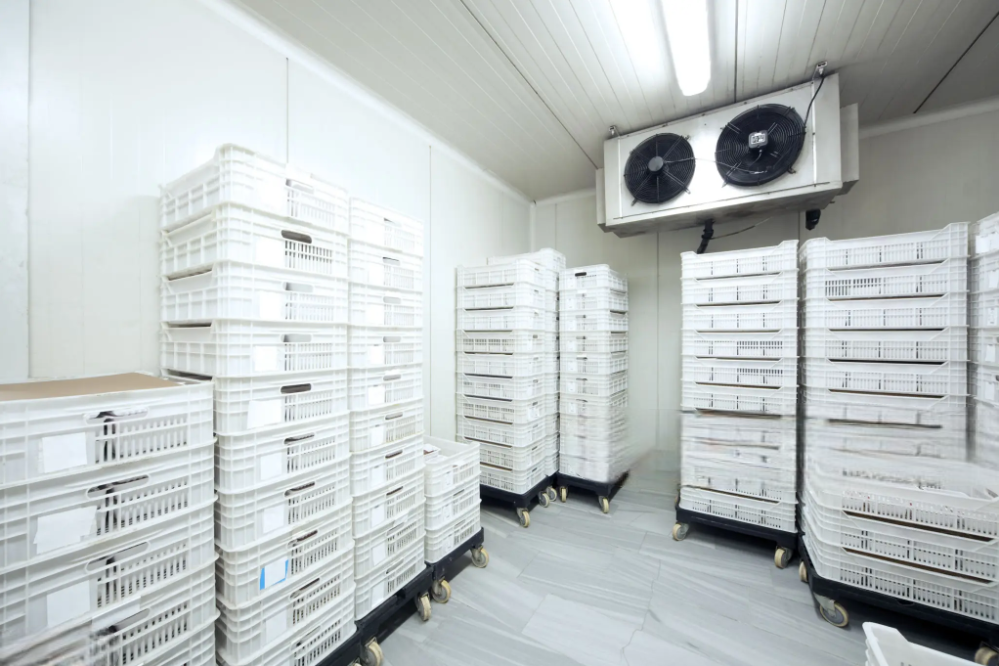
A cold storage room works correctly when every component — from insulation and compressor unit to the control system and refrigeration doors — is sized, installed and maintained in correlation with the rest of the installation. A single weak link can compromise food safety, increase energy consumption by tens of percent, or generate significant product losses.
A turnkey solution means that a single supplier covers the entire process: initial consultancy, technical design, equipment procurement, installation and commissioning, followed by long-term service and maintenance. This approach eliminates the risks of fragmented responsibility and brings technical coherence from the first feasibility study to the last maintenance report.
What Does a Turnkey Cold Storage Room Mean?
A turnkey execution means the client submits a requirements brief and receives a fully functional, tested and documented installation. In practice, this covers:
Requirements analysis: working temperatures, storage volume, access frequency, products stored
Technical design: thermal load calculation, refrigeration system selection (direct DX, glycol, CO₂), sizing of cooling units and electrical installation
Equipment procurement: compressors (Bitzer, Danfoss, Emerson), evaporators, condensers, automation panels, monitoring systems
Installation execution: insulated sandwich panels, steel structures, refrigeration equipment, electrical installation, alarm and monitoring systems
Commissioning and testing: leak testing, refrigerant charging, control system parametrization
Technical documentation: technical manuals, commissioning reports, preventive maintenance plans
Stages of a Turnkey Cold Storage Room Project
1. Initial Technical Consultancy
Before any design work begins, a detailed assessment of the specific context is required: the type of products stored, required temperature, storage duration, number of daily accesses, location and technical access. This information determines all subsequent technical decisions.
A fresh meat storage room requires a temperature of +2°C / +4°C and controlled humidity. A freezer room for fish operates at -18°C / -25°C and requires completely different insulation conditions and compressor sizing. Confusing these parameters at the design stage generates additional costs that are difficult to recover later.
2. Technical Design
The technical design of a cold storage room covers three interdependent areas:
Thermal load calculation: includes heat losses through walls, floor and ceiling, product cooling load, heat generated by lighting and equipment, door opening load
Refrigeration system sizing: selection of circuit type (R404A, R448A, R744/CO₂, glycol), compressor capacity, evaporator and condenser surface area
Automation and monitoring design: temperature control systems, fault alarms, continuous data logging for traceability
A correct design neither oversizes the installation — which would increase the initial cost and energy consumption — nor undersizes it, which would result in insufficient cooling capacity during peak loads.
3. Installation Execution
The installation of the cold storage room follows the logical construction sequence:
Preparation of the support structure and floor
Installation of insulated refrigeration sandwich panels (polyurethane or expanded polystyrene, thickness calculated according to working temperature)
Fitting of refrigeration doors with airtight gaskets and appropriate locking systems
Installation of refrigeration equipment: interior evaporators, refrigeration plant or external cooling units
Running of refrigeration pipework (copper or stainless steel), electrical installation and control system
Installation of interior lighting resistant to humidity and low temperature conditions
4. Commissioning and Testing
Commissioning is the stage at which the installation is fully verified before being handed over to the client:
Pressure and leak testing of the refrigeration circuit
Refrigerant charging according to technical specifications
Control system and alarm parametrization
Performance test: verification that the working temperature is reached and maintained
Operator training
5. Preventive Maintenance
A well-designed and properly installed cold storage room has a lifespan of 15–25 years, provided a preventive maintenance schedule is followed. This includes quarterly pressure checks, refrigerant inspection, evaporator and condenser cleaning, door and gasket verification, and electrical system inspection.
Neglected maintenance frequently leads to major failures during periods of high thermal load — exactly when the business cannot afford an installation shutdown.
Types of Turnkey Cold Storage Rooms
Cold Storage Rooms for the Food Industry
The food industry has strict requirements regarding product safety, temperature traceability and hygienic conditions of the installation. Cold storage rooms for meat, fish, dairy, bakery products or fruit and vegetables are designed to comply with HACCP standards and current food safety legislation.
Cold Storage Rooms for Retail and Distribution
Retail chains and distribution warehouses require installations with high capacity, frequent access and continuous operation. Cold storage rooms for food stores or logistics centres are sized for high product throughput and equipped with real-time temperature monitoring systems.
Cold Storage Rooms for Processing Plants
Food processing plants have specific requirements: temperature-controlled processing areas, maturation rooms, blast freezing tunnels and storage spaces. The design of these installations must integrate the plant's technological flow, not be added later as an improvised solution.
Industrial Cold Storage Warehouses
Industrial cold storage warehouses can reach surfaces of thousands of square metres and temperatures between -30°C and +15°C. Their design requires rigorous insulation calculations, redundant cooling systems and advanced automation for managing multiple zones with different temperatures.
When Do You Need This Solution?
You are building or expanding a cold storage warehouse and need a complete installation delivered by a single responsible supplier
You have an old cold storage room with high energy consumption or frequent failures and want to replace it with a modern solution
You are opening a food store, restaurant or food processing facility and need appropriate refrigeration equipment
You manage a processing plant and want to optimise existing refrigeration installations or expand their capacity
You have received a notification from authorities regarding installation non-conformities and need documented remediation
What to Look for Before Choosing a Supplier
Choosing a turnkey cold storage room supplier is a decision with impact over 15–20 years. The relevant criteria:
Demonstrable experience: portfolio of similar projects, verifiable references from your industry
In-house design capability: the supplier must have engineers experienced in thermal calculations and refrigeration system design, not just resell equipment
Recognised technical partners: use of equipment brands with service and spare parts available on the Romanian market
Maintenance contract included or available: ensuring continuity of technical support after installation completion
Complete documentation: technical design, certificates of conformity, technical manuals, commissioning reports
Emergency response time: in the food industry, a faulty cold storage room can generate losses of tens of thousands of euros in a single day
FAQ
1. How much does a turnkey cold storage room cost?
The cost varies depending on surface area, working temperature, type of products stored and level of automation. A commercial cold storage room of 20–50 m² can start from €8,000–15,000, while an industrial cold storage warehouse of several hundred square metres can reach €50,000–200,000 or more. The most accurate starting point is a technical consultancy with a thermal load calculation and a personalised quote.
2. How long does a turnkey cold storage room project take?
A straightforward project — a 20–50 m² commercial cold storage room — can be completed within 3–6 weeks from firm order, including design, procurement and installation. Complex projects — industrial warehouses, processing plants — require 3–6 months, depending on size and technical specifics.
3. Which refrigerants are used today?
European legislation is progressively restricting the use of high-GWP refrigerants (R404A, R507). Current alternatives are R448A, R449A and, for large installations, transcritical CO₂ (R744). The choice of refrigerant influences the installation design, equipment cost and maintenance complexity.
4. Is authorisation required for a cold storage room?
Installations with significant quantities of refrigerant may be subject to ISCIR regulations or other technical requirements. The technical design must be prepared by an authorised designer and installation must be carried out by qualified personnel. A serious supplier covers all compliance aspects within the turnkey contract.
5. Preventive or reactive maintenance?
Reactive maintenance — intervention only at breakdown — has average costs 3–5 times higher than preventive maintenance, when accounting for emergency parts, out-of-hours labour and product or production losses. For any installation with significant commercial value, preventive maintenance is the only approach that protects the investment.
Do you need a cold storage room that is correctly designed, professionally installed and properly maintained? Contact the InterFrig Group team for a free technical consultancy. We analyse your requirements, calculate the thermal load and deliver a detailed quote tailored to your business.